Red is the color clients love most on day one and complain about first by week three. That is not a quality problem. Red pigment behaves differently inside the hair shaft than brown or blonde pigment, and it leaves faster through every opening the cuticle gives it: washing, heat, sun, and plain water.
At The Directors' Cut in Monroe, all-over color and color correction are regular work, and red shades from copper to deep auburn all share the same physics. The good news is that fade is manageable once you know which habits drive it, and the calendar matters, because a Monroe summer is harder on red hair than a Monroe winter.
Why red leaves first
Red dye molecules are larger than the molecules used for darker, cooler shades, and they sit less securely in the hair shaft. Every wash swells the hair and opens the cuticle slightly, and the larger red molecules slip out more readily. Porosity makes it worse: hair that has been lightened, permed, or heavily heat-styled has a rougher cuticle, so red applied over it fades faster still.
Water temperature and shampoo choice are the daily levers. Hot water opens the cuticle more than lukewarm water does. Strong sulfate shampoos are effective detergents, which is exactly the problem: they lift away surface pigment along with oil and product. Ultraviolet light breaks pigment down directly, the same way it fades fabric, and chlorine adds chemical stress on top of that.
The seasonal pattern in Piedmont North Carolina
Summer is the hard season for red. Sun exposure is at its longest, pool days are frequent, and most people wash more often because of heat and sweat. A red done in May without a summer routine can look like a different, duller color by August. Fall and winter are kinder: less ultraviolet, less swimming, and hats that protect rather than just decorate. Many committed redheads schedule their most vivid refresh heading into fall, when it will hold longest.
Spring sits in between, with one regional addition: pollen season and the extra washing it prompts. Rinsing hair at night rather than doing a full shampoo every time is a useful compromise in April.
Slowing red fade, season by season
- All year: wash in lukewarm water, not hot, and keep washes to the frequency your hair type actually needs rather than a daily default.
- All year: use a sulfate-free shampoo, and consider a color-depositing conditioner in a matching red tone between salon visits, as your stylist advises.
- Summer: wear a hat or scarf for long outdoor stretches, since ultraviolet light fades red pigment directly.
- Summer: wet hair with clean water before swimming and rinse it right after the pool, so it absorbs less chlorinated water.
- Summer: expect faster fade and plan a gloss or toner refresh mid-season instead of a full recolor.
- Fall and winter: use the gentler season for your boldest shade, and protect hair from very hot shower water on cold mornings.
- Any season: apply heat protection before blow-drying or ironing, because high heat dulls color as well as damaging the shaft.
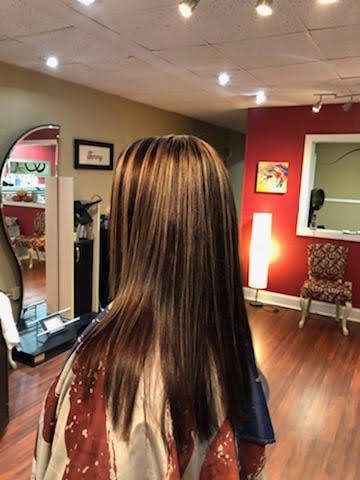
What a gloss does, and what it cannot do
A gloss or toner appointment refreshes the tone sitting on the hair without repeating the whole color process. For reds, it is the standard mid-cycle maintenance: it restores richness and shine, evens out the faded mid-lengths and ends, and takes far less time than a full appointment. What it cannot do is fix roots that have grown in a different color, or rescue hair whose base color itself needs changing. That is a full color conversation.
Home color-depositing products sit in the same category: useful for tone, within limits. Match the shade family carefully, use gloves, and stop if the tone starts building up darker at the ends than at the roots, a sign the ends are grabbing extra pigment because they are more porous.
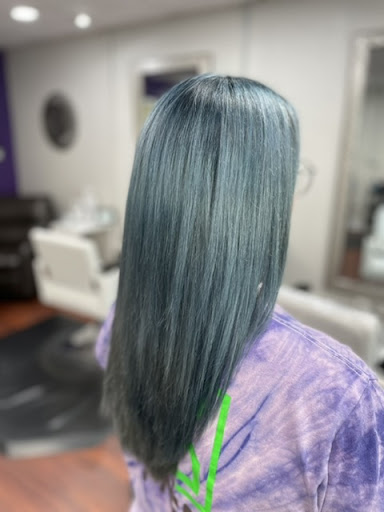
Setting honest expectations
Even with perfect care, red softens between appointments. The realistic goal is a graceful fade: copper mellowing toward a warm strawberry tone rather than going patchy or flat. How fast that happens depends on your starting porosity, wash frequency, and sun habits more than on any single product. Tell your stylist how often you actually wash and swim, not how often you think you should. A maintenance plan built on your real routine in Monroe will beat an ideal routine you abandon by the second week.
Common questions
How many washes before red starts to fade?
Some softening is normal within the first few washes as loose surface pigment rinses out. Noticeable fade usually builds over three to four weeks, faster with hot water, daily washing, and sun.
Does cold water really help?
Lukewarm is the practical recommendation. Cooler water opens the cuticle less than hot water, so less pigment escapes, and it is far more tolerable than an ice-cold rinse.
Can I make red permanent?
No red is truly permanent in effect, even when the dye itself is a permanent formula. The pigment fades with washing and light; maintenance glosses are how committed redheads keep the shade true.
← All guides from The Directors' Cut← Back to The Directors' Cut